REVIEW · SPLIT
History Split Walking Tour in German – Small group
Book on Viator →Operated by Ancient Tours · Bookable on Viator
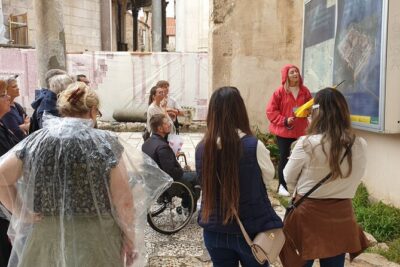
Split’s palace makes more sense with a guide. This German-language walk turns Diocletian’s Palace into a clear story about power and how the city grew around it. I especially liked the way guides such as Antonella and Josip mix sharp explanations with humor and lots of patience for questions.
You’ll also appreciate the tight route and smart pacing. It’s a small group tour (max 20), so you can actually hear what’s going on and ask follow-ups. The main catch: it’s not recommended if you have trouble with high steps, since the old town is full of uneven ground.
In This Review
- Why This German Diocletian’s Palace Tour Works
- Starting at the Peristyle: Your Orientation Moment
- Vestibulum Stop: Power in a Smaller Space
- Diocletian’s Substructures: Where the Story Becomes Practical
- Golden Gate and the Gregory of Nin Connection
- Riva Harbor: Visualizing the Palace and Getting a Sea-Front Break
- Fruit’s Square (Trg Brace Radic) and Marko Marulić
- Split Synagogue: Passing a 16th-Century Thread
- Timing, Small Groups, and Getting Your Money’s Worth
- What to Expect Day-of: The Route, the Pace, and the Ends
- Who This Tour Suits Best (and Who Should Skip)
- Should You Book This Diocletian’s Palace Tour?
- FAQ
- Is this tour in German?
- How long is the experience?
- How many people are in the group?
- Where does the tour start and end?
- Do I need separate tickets for the stops?
- Is the tour suitable for people with mobility issues?
- Are service animals allowed?
- Is cancellation free?
- When will I get confirmation after booking?
Why This German Diocletian’s Palace Tour Works
A lot of people rush through Diocletian’s Palace like it’s just “pretty stone.” This tour does the opposite. You learn what you’re looking at, why it was built the way it was, and how later centuries layered their own culture over the original layout.
The big win is focus. In about 1 hour 30 minutes, you cover the main areas that help you understand the whole palace complex, plus a few surrounding spots that show Split isn’t stuck in Roman time. You also get the benefit of a German guide who can explain the details in plain language, not just recite facts.
And yes, the guide personality matters. When someone is easy to listen to, you stay curious. I liked that this tour is built for interaction: you can ask questions, and the answers don’t feel brushed off.
Starting at the Peristyle: Your Orientation Moment
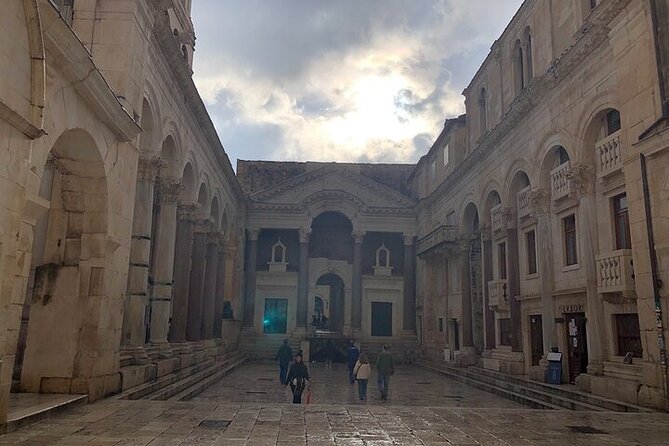
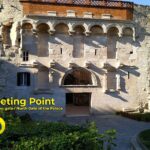
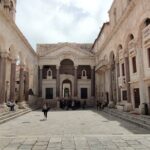
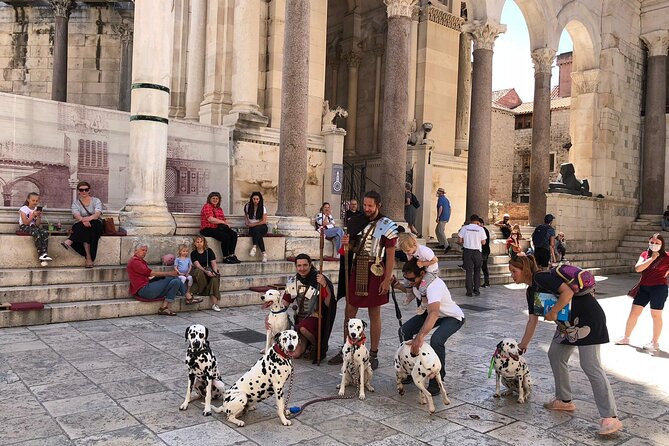
You begin at the Peristil ulica area, at the heart of Diocletian’s Palace. The first stop is the Peristyle itself—the central square that connects you to almost everything else. If you’ve ever walked into a warren of streets and immediately lost your internal GPS, this stop helps fix that.
Plan to spend around 15 minutes here. It’s not just a photo stop. You’re shown how the layout works and what the space means in the bigger “who ruled, how, and why” story of the palace. Once you understand the Peristyle, the rest of the buildings start to click into place.
Practical note: this is a good moment to watch where crowds move and where you’re walking next. When your guide points out the routes, you’ll save time later.
You can also read our reviews of more walking tours in Split

Vestibulum Stop: Power in a Smaller Space
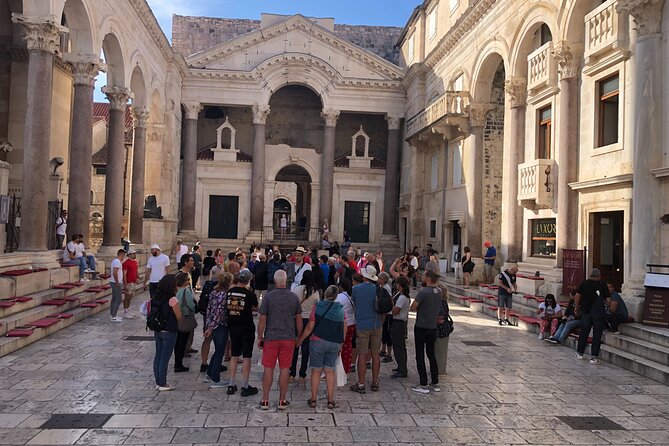
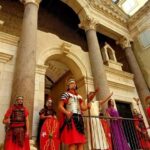
Next up is the vestibule connected with emperor Diocletian. This is a short stop (about 5 minutes), but it’s chosen for a reason: it’s the kind of space that helps you understand how authority was staged. You don’t just learn that the emperor was important—you learn how places like this were used to reinforce his status.
One fun detail you might catch: the guide may introduce the possibility of hearing traditional Dalmatian singing. Even if it doesn’t happen, the explanation around local traditions and cultural memory is part of the charm of this walk.
Drawback to consider: because the stop is brief, don’t treat it like a full “must read every stone” moment. Come with questions in mind, and you’ll get more out of the quick explanation.
Diocletian’s Substructures: Where the Story Becomes Practical
Then you move into the substructures of Diocletian’s Palace. Expect about 10 minutes here, with plenty of context about how these parts were constructed and what they were used for over time.
This is one of the most valuable sections of the tour because it shifts your thinking. Instead of only admiring grand entrances, you’re looking at the behind-the-scenes spaces—areas that help explain how a palace could function day-to-day and how that function changed as centuries passed.
Important detail for planning: you won’t visit the museum part of the substructures during the tour. That can be a plus if you like guided orientation and then want to choose what to do next at your own pace. If you do want museum time, you’ll know where to return afterward.
Golden Gate and the Gregory of Nin Connection
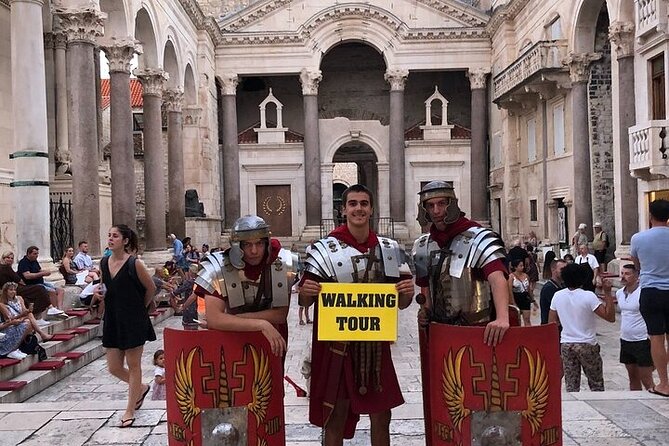
The Golden Gate is the main entrance of Diocletian’s Palace, and it’s one of the emotional peaks of the walk. You’ll spend about 10 minutes learning about the gate itself and then turning to a bigger cultural question: who Gregory of Nin was and why his name matters to local history and language.
You’ll also see the statue of Gregory of Nin at this stop. This matters because Split isn’t only a Roman museum town. It’s a living place where older identities get carried forward, rewritten, and honored—sometimes in the most unexpected ways, like through a statue at a Roman threshold.
If you enjoy those “how history survives” moments, you’ll like this section a lot.
Riva Harbor: Visualizing the Palace and Getting a Sea-Front Break

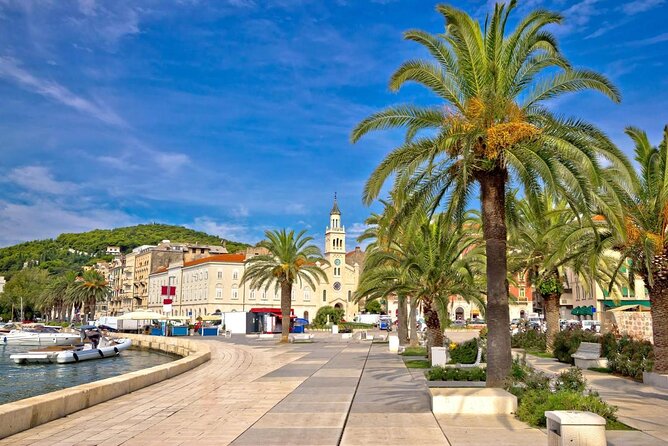
After the palace entrances and corridors, you step into the open air at Riva Harbor. You’ll spend about 15 minutes here, and it’s a welcome change of tempo after the stone-heavy stops.
Two things make this section work:
- You’ll see a bronze model of Diocletian’s Palace, which helps you mentally map the scale and layout you just walked through.
- You’ll connect the palace story with the history of Split’s Riva promenade—so you start seeing how the city’s shoreline and public spaces became part of everyday life.
This stop is where “history” stops being abstract. A model in bronze can do what a lecture can’t: it lets you understand the shape of the place, fast.
Also, if the weather is warm, this is a good place to slow down for a minute. Even short walks feel longer in midday heat.
You can also read our reviews of more historical tours in Split



Fruit’s Square (Trg Brace Radic) and Marko Marulić
Next is Fruit’s Square, also known as Trg Brace Radic. Plan for about 10 minutes. Here the tour widens the lens again—past Roman engineering and into later European influence.
You’ll learn about a Venetian citadel linked to the area and, more importantly, you’ll connect the square to Marko Marulić, described as the father of Croatian literature. That title might sound like a school fact, but your guide frames it in a street-level way: you see how a public space connects with language, identity, and cultural pride.
This stop is a good reminder that “history” isn’t only wars and rulers. It’s also books, words, and who gets remembered.
Split Synagogue: Passing a 16th-Century Thread
The last major cultural stop is the Split Synagogue. You’ll pass by it and learn about the history of the Jewish people in the city of Split. This part is about 10 minutes.
One practical detail: admission to the synagogue is not included. So if you’re the type who wants to go inside, plan extra time and budget to do so separately.
If you’re sensitive to learning about a community through outside viewing only, that’s something to keep in mind. The tour doesn’t position this as a long visit, just as an important stop that helps you understand Split’s mixed cultural background.
Timing, Small Groups, and Getting Your Money’s Worth
This tour runs about 1 hour 30 minutes. It’s short, but it’s not skimpy—because the stops are picked to give you a complete “map + meaning” experience without dragging you through museum corridors.
The price is $165.08 per person, which is not bargain-bin. So here’s the value argument in plain terms: you’re paying mostly for interpretation. Most of the core locations have free admission for the tour stops, so you’re not paying for a stack of ticketed entries.
You’re also paying for a guide who can explain multiple centuries of change without losing you. The reviews highlight guides who are fun to listen to, smart, and genuinely responsive to questions. I’d treat that as more than a nice-to-have. In a complicated site like Diocletian’s Palace, good explaining saves you time and confusion.
Small group size (max 20) matters too. In big crowds, you end up staring at the back of someone’s head. Here, you’ll have a better chance of hearing details and asking what you’re curious about—especially since the tour is designed for that kind of conversation.
If you like self-guided walking, you could do this on your own. But if you want a clean orientation and cultural connections without hours of research, this structure is a strong trade.
What to Expect Day-of: The Route, the Pace, and the Ends
The tour starts near Peristil ulica (Peristil ul., 21000, Split, Croatia). It ends near Diocletian’s Palace in the same general area (Grad, Split, Croatia). The guide can take you back to the Peristyle if you ask, which is handy if you’re using the palace area as your base.
You’ll walk through a mix of indoor-feeling palace passages and open squares. Most travelers can participate, but it’s not recommended for people with issues with high steps. If that describes you, you might want to choose a different tour style that avoids uneven stair access.
Also keep in mind:
- Service animals are allowed.
- It’s near public transportation, so you’re not trapped far from your next stop.
Finally, plan to arrive a few minutes early. Old town streets can be a puzzle at first, and it’s nicer to start calm than sweaty.
Who This Tour Suits Best (and Who Should Skip)
This is a great fit if you:
- Want a German-language guide and don’t want to translate everything in your head.
- Are interested in Diocletian’s rise in power and how the palace fit into that story.
- Like getting orientation fast—so Split’s maze feels less random.
- Enjoy guided stops that connect Roman structures to later culture, language, and communities.
You might skip it if:
- You struggle with lots of steps or uneven surfaces.
- You’re looking for a long museum-style visit, since some parts (like the museum section in the substructures) aren’t part of the guided route.
- You only want the quickest photo loop. This tour is built for learning and questions.
Should You Book This Diocletian’s Palace Tour?
I’d book it if you want to understand Diocletian’s Palace in a short, structured time window. The combination of key stops (Peristyle, vestibule, substructures, Golden Gate) with cultural connections (Gregory of Nin, Marko Marulić, and the synagogue area) makes it more than a walk through ruins.
It’s also an easy “first-day” move. You’ll walk away knowing where you are, what you’re looking at, and what to notice when you wander later on your own.
If you’re already comfortable wandering complex sites and you only want the Roman core, you might not need a guided tour. But if you want your day to start with clarity instead of confusion, this one is a smart use of your time in Split.
FAQ
Is this tour in German?
Yes. It’s specifically a German-language walking tour.
How long is the experience?
It lasts about 1 hour 30 minutes.
How many people are in the group?
The group is limited to a maximum of 20 travelers.
Where does the tour start and end?
It starts at Peristil ulica (Peristil ul., 21000, Split, Croatia) and ends near Diocletian’s Palace (Grad, Split, Croatia). The guide can also take you back to the Peristyle if you ask.
Do I need separate tickets for the stops?
Admission is listed as free for the major palace stops. The Split Synagogue admission is not included.
Is the tour suitable for people with mobility issues?
It’s not recommended for travelers who have issues with high steps. Most travelers can participate, but the terrain matters.
Are service animals allowed?
Yes, service animals are allowed.
Is cancellation free?
Yes. You can cancel up to 24 hours in advance for a full refund.
When will I get confirmation after booking?
You should receive confirmation within 48 hours of booking, subject to availability.