REVIEW · SPLIT
Jewish Heritage & Diocletian’s Palace Private Split Tour
Book on Viator →Operated by Jelena Vrancic Private Tourist Guide · Bookable on Viator
Split history has layers you can walk through. This private tour connects Diocletian’s Palace with the Jewish community’s story in Split, from Roman-era traces to a synagogue you can still visit today. You’ll spend real time in the palace substructures, then move through the old streets toward the Jewish ghetto and the community’s synagogue.
What I like most is the way the route makes history feel physical. Those menorah carvings you see in the palace basements turn abstract facts into something you can point at, and your guide keeps the pace steady without turning it into a lecture. The second big plus is the synagogue stop: you visit, and you also get stories from a local community member who helps explain what this place means now.
One consideration: this is still a walking tour through the Old Town, with multiple short stops and a mix of outdoor views and indoor sites. If you have mobility limits, bring them up in advance, because at least one guide adjusted the plan for ambulation needs—but you’ll still want to plan for getting around.
In This Review
- Key highlights you should expect
- Why Split’s Diocletian’s Palace fits Jewish heritage so well
- Diocletian palace substructures: menorahs, Roman rooms, and why this time matters
- The palace route after the substructures: vestibule, peristyle, and a key statue
- The Jewish ghetto walk and synagogue visit: stories you can’t get from guidebooks
- Narodni Trg plaque and the surrounding squares: seeing the 1942 memory
- Riva Harbor, Prokurative, and Marmontova Ulica: ending with the living city
- Price and what you get for $187.05 per person
- How the guides keep it from feeling like a lecture
- Who should book this Jewish Heritage and Diocletian’s Palace tour
- Practical tips before you go
- Should you book this tour?
- FAQ
- How long is the Jewish Heritage & Diocletian’s Palace Private Split Tour?
- Is this tour private?
- What does the tour include?
- Are admission tickets included?
- Does the tour offer pickup?
- Where does the tour start, and where do you meet cruise ship guests?
- What language is the tour offered in?
- Are meals included?
- Are service animals allowed and can children join?
Key highlights you should expect
- Menorah carvings in the palace basements that connect Split to Jewish presence from early centuries
- A private, licensed guide who tailors the flow to your group and questions
- Synagogue visit plus a local storyteller who shares lived context, not just dates
- Narodni Trg plaque reference to June 12, 1942 and what was lost from synagogue archives
- Old Town squares and harbor views that round out the day with modern Split life
Why Split’s Diocletian’s Palace fits Jewish heritage so well
Split’s Old Town is basically one big history book you can read with your feet. Diocletian’s Palace sits at the center, and it’s the reason the city’s later stories took root right here. What makes this tour special is that it doesn’t treat Jewish history as a side note. It shows how Jewish life was woven into the same city fabric.
I love that the tour starts in the place where you first notice how many eras overlap. The Roman palace is the frame, and then Jewish traces show up as you look deeper—literally in the substructures. That structure helps you understand why Split is so good at preserving layered memory.
You can also read our reviews of more private tours in Split


Diocletian palace substructures: menorahs, Roman rooms, and why this time matters
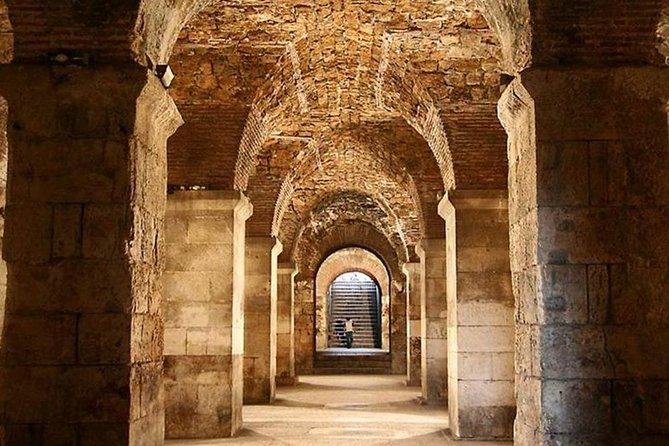
Your first real stop is the Diocletian Palace Substructures, where you get about 45 minutes and an admission ticket is included. This is the area that makes people say the tour is more than just walking by famous walls. Down here, the palace feels less like a postcard and more like an operating machine from the 4th century era.
The big story beat is the Jewish connection you can see: menorah carvings found in the basements. It’s one thing to hear that Jews lived in the region centuries ago. It’s another thing to stand where those symbols were carved and learn what that presence looked like in Roman and post-Roman Split.
You also get the broader timeline your brain needs. The Jewish community of Split is described as one of the oldest in Europe, with archaeological findings from nearby Salona pointing to Jewish life alongside Romans sometime between the 2nd and 3rd centuries AD. Later, when people fled attacks and resettled, the palace became a refuge for survivors from Salona, including Jewish families.
Practical tip: this stop gives you a calmer start before the tour shifts into more street-level wandering. If you’ve been in the sun all day, it’s also a welcome change of pace—though it’s still part of an actively guided experience.
The palace route after the substructures: vestibule, peristyle, and a key statue
After the basements, the tour keeps moving through the palace itself with a few shorter, high-impact moments.
You’ll see the Vestibulum of Diocletian’s Palace, a former foyer of the palace. This is a quick stop, about 10 minutes, and it’s free. The goal here is to get your bearings inside the palace complex before you move into the main open spaces.
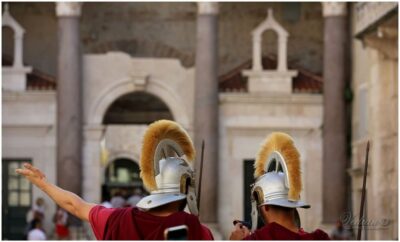
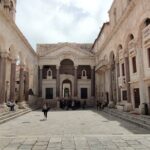
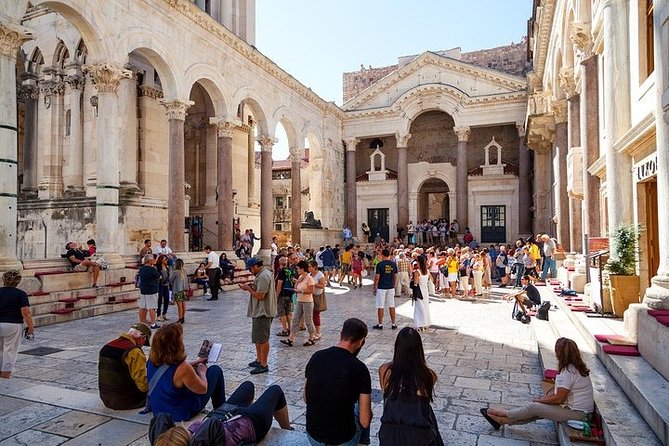
Next is the Peristyle of Diocletian’s Palace. The peristyle is the palace’s main square area, with functions that changed as the palace and city changed around it. You’ll also notice the columns brought from different parts of the empire when the palace was built around 305 AD. In other words, this wasn’t an island of local stone—it was a Roman showpiece assembled from far away.
Then you’ll get a breather with the Grgur Ninski statue, about 10 minutes. This one is tied to the bishop Grgur Ninski and the Croatian sculptor Ivan Meštrović. It’s a nice reminder that the palace isn’t frozen in time. Modern Split keeps adding meaning to the same walls.
The Jewish ghetto walk and synagogue visit: stories you can’t get from guidebooks
This is the heart of the tour for many people, and it’s easy to see why. You’ll walk through the Jewish ghetto area while your guide explains the Jewish community’s presence and role in Split. This section isn’t just about where things were. It’s about how people lived and how the city changed around them.
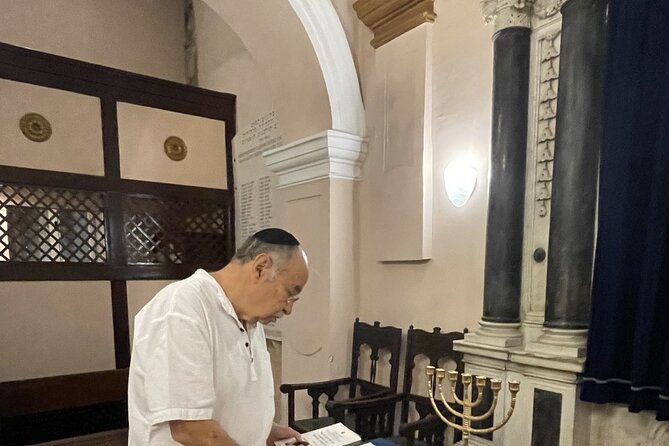
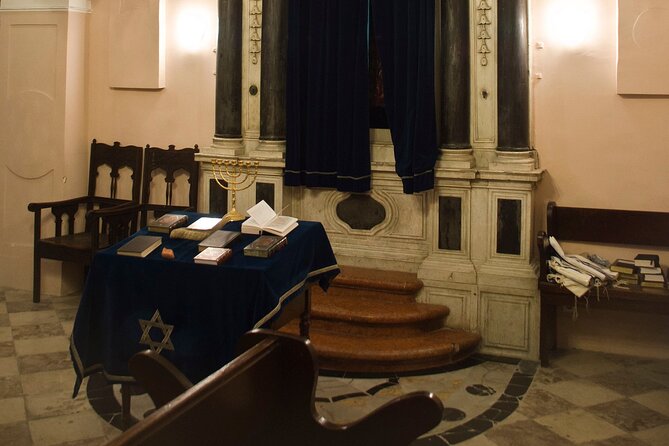
Then you visit the Split Synagogue, with about 30 minutes on site. Admission isn’t listed as a cost item here, so you focus on the experience itself. What makes it feel different from a typical exterior-only history stop is the chance to meet someone connected with the synagogue.
In the reviews, a few names stand out. Albert, a member of the Jewish community and someone who helps share the synagogue’s story with visitors, is specifically mentioned as a highlight. Other guides on the program have also arranged synagogue access when possible, which can matter because houses of worship don’t always run like museums with fixed hours.
You’ll likely hear how the synagogue fits into a longer arc, from early Jewish life through the centuries of change. It’s also not just a quiet viewing experience. The guide sets context, and then the community member adds the human layer—what the space means, and how Split’s Jewish history connects to the city as it is today.
Narodni Trg plaque and the surrounding squares: seeing the 1942 memory
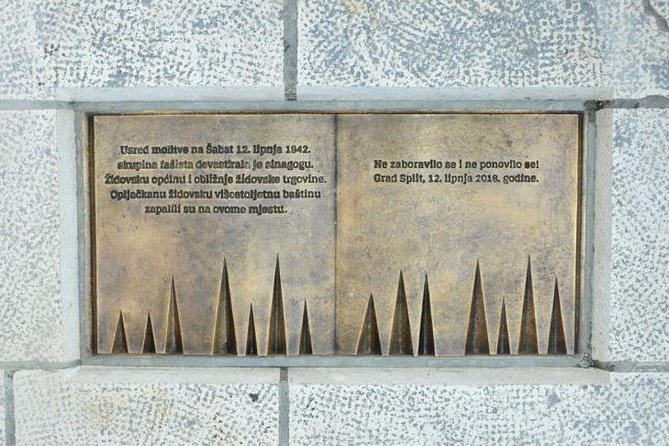
After the synagogue, the tour heads to Narodni Trg, the main square area near the center of town. Here you’ll learn about a bronze plaque placed to remember the destruction of precious items and archives from the synagogue on June 12, 1942. It’s one of those moments where the past gets named in plain, specific terms.
From there, you’ll also get a visual payoff. Venetian architecture shows up around the main piazza, and it’s a reminder that Split’s look isn’t only Roman. It’s a mix of styles from different periods layered onto the same walking network.
Then the tour moves to Fruit’s Square (Trg Brace Radic), about 5 minutes. You’ll learn about Marko Marulić, described as the father of Croatian literature, and his statue in the square. This stop is short, but it helps the tour feel like a real day in Split rather than a museum circuit.
You can also read our reviews of more historical tours in Split

Riva Harbor, Prokurative, and Marmontova Ulica: ending with the living city
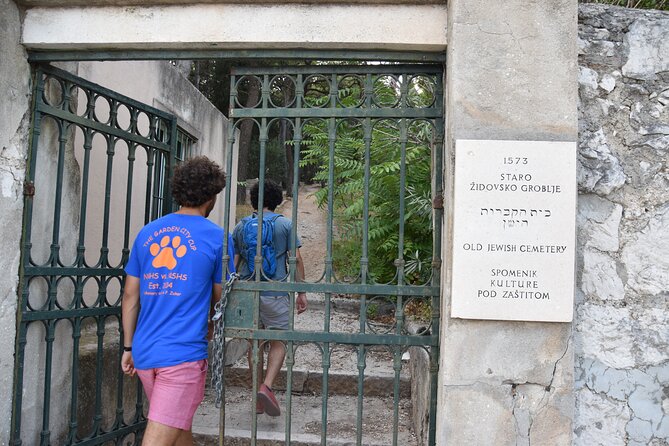
The final stretch keeps you close to the places that feel like Split on a normal day.
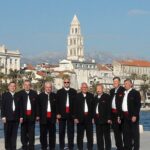
You’ll head to Riva Harbor, the waterfront promenade locals call their living room. This is the place for coffee, an easy stroll, and casual people-watching. Even if your brain is still in history mode, it’s a smart shift. It gives you a chance to process what you just saw while the city wakes up around you.
Next is Prokurative, also known as Republic Square. You’ll be told why it resembles St. Mark’s Square in Venice and how the neo-Renaissance arches shape the feel. The square is only open on the south side for views toward the harbor and Riva, which is an interesting little detail that affects how you take in the view.
The last stop is Marmontova Ulica, another promenade popular with both locals and visitors. The fish market runs off the street, and you can stop if you want to see where people buy fresh Adriatic fish. It’s a small choice, but it’s the kind of local moment that makes the tour feel grounded.
Price and what you get for $187.05 per person
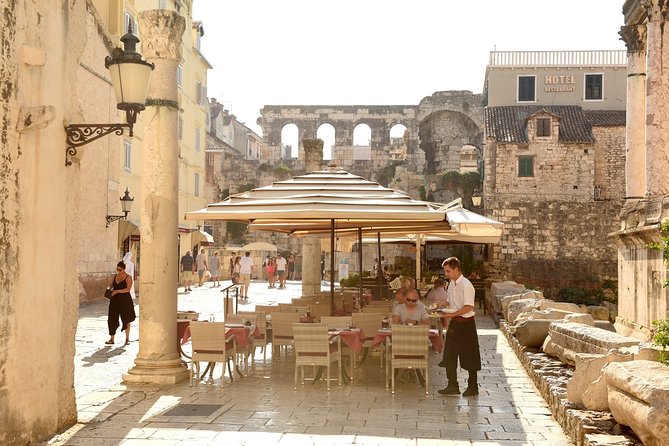
At $187.05 per person, this tour is not the cheapest option in Split. But it also isn’t trying to be. You’re paying for a private guided experience, a licensed guide, and a focused route that includes paid access where it matters.
The substructures ticket fee is included, and that alone can make a big difference versus tours that only show exteriors. You’re also getting the synagogue visit paired with a community member’s stories, which is hard to replicate on your own. If you’ve ever tried to piece together Jewish heritage sites around a Roman palace while also figuring out timing and access, you know why a guide helps.
Duration is about 2 hours 30 minutes, which is long enough to do the key indoor parts properly, but short enough to keep the rest of your day flexible. If you’re on a cruise or only have one full morning in Split, that matters.
One more value point: pickup is offered, and the meeting point is set up for cruise ship guests. Your guide can also adjust the start time on request since private tours can fit around your schedule better than fixed-group tours.
How the guides keep it from feeling like a lecture
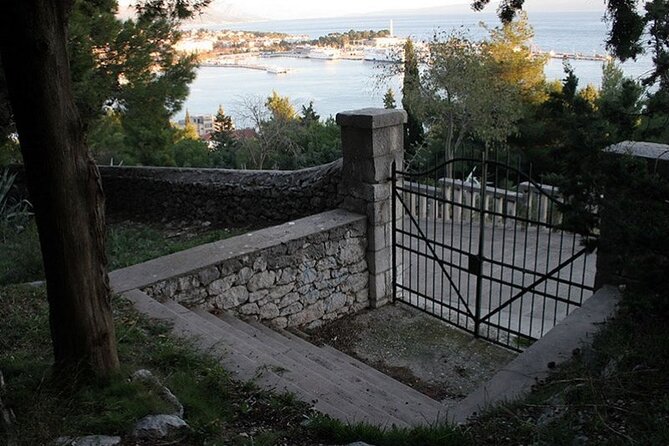
The biggest theme in the feedback is how the guide delivers the story: clear, friendly, and not heavy-handed. Several guides are mentioned by name across the program, including Jelena Vrancic and others like Emil, Vinka, and Pero. That matters because you’re not just buying facts. You’re buying the skill of turning facts into something you can remember.
One review story that sticks with me: when weather turned rainy, the guide handled it with practical improvisation, including umbrellas and a cafe stop to keep learning going without rushing. That’s a real quality in Old Town touring, where weather can mess with your timing fast.
If you like questions—history buff or not—you’ll probably enjoy this setup. The tour format is private, so it’s easier to keep conversations flowing instead of waiting your turn in a group.
Who should book this Jewish Heritage and Diocletian’s Palace tour
This is a strong fit if you want both sides of Split’s story: the Roman palace world and the Jewish community narrative that runs through it. It’s also a good choice if you enjoy meeting people tied to a site rather than only reading plaques.
I’d especially recommend it for:
- People who like history but want it explained in plain language and real places
- Travelers who appreciate small details like symbols (menorah carvings) and memorial plaques
- Anyone who wants a private experience with flexibility for pace and questions
If you’re allergic to walking and prefer long stretches of sitting, this might feel busy. It’s not an hour-and-done exterior tour. It’s a guided route with several stops in a compact old-town zone.
Practical tips before you go
First, wear shoes that handle uneven Old Town streets. Even when stops are short, you’ll keep moving.
Second, bring your curiosity. The tour covers several eras and includes both Roman and much later history points, so the questions can come fast. If you have any mobility concerns, mention them when you book so the guide can plan a comfortable rhythm.
Finally, if you’re planning the rest of your day, keep some buffer time. Ending near Riva and Prokurative means you’ll likely want to linger for a drink, coffee, or just one more look back at the harbor.
Should you book this tour?
If your goal is to understand Split as a living place with layered identities, I think you’ll be glad you booked. The pairing of Diocletian’s Palace substructures with a synagogue visit is the kind of combination that’s hard to self-plan well, especially when you want more than dates on a sign.
Book it if you want a guided walk that links symbols, architecture, and memorial history in a way that feels human. Skip it only if you want a light, purely scenic tour with minimal walking and no focus on the Jewish community story.
In the end, this is a tour where Roman stone and Jewish memory share the same ground—and a good guide helps you notice both.
FAQ
How long is the Jewish Heritage & Diocletian’s Palace Private Split Tour?
It’s about 2 hours 30 minutes.
Is this tour private?
Yes. It’s a private tour, so only your group participates.
What does the tour include?
You get a private guided tour, a visit to the synagogue and Jewish ghetto, and the fee for the Diocletian’s Palace substructures.
Are admission tickets included?
Yes for the Diocletian Palace substructures. The other listed stops don’t have an admission charge noted.
Does the tour offer pickup?
Pickup is offered. The start time is on request for private tours.
Where does the tour start, and where do you meet cruise ship guests?
The meeting point is Obala Hrvatskog narodnog preporoda 23, Split, by the bronze map of the city at Riva. All cruise ship guests are met at the port by customs with a sign showing the guest’s name.
What language is the tour offered in?
The tour is offered in English.
Are meals included?
No. Meals and beverages aren’t included.
Are service animals allowed and can children join?
Service animals are allowed. Children must be accompanied by an adult.