REVIEW · SPLIT
Split Walking Tour: History, Legends & Tales
Book on GetYourGuide →Operated by Tour4You · Bookable on GetYourGuide
If Split feels big and confusing, this tour helps you click. You’ll get a clear, local walk through the Diocletian’s Palace complex and the Old Town streets where past and present overlap.
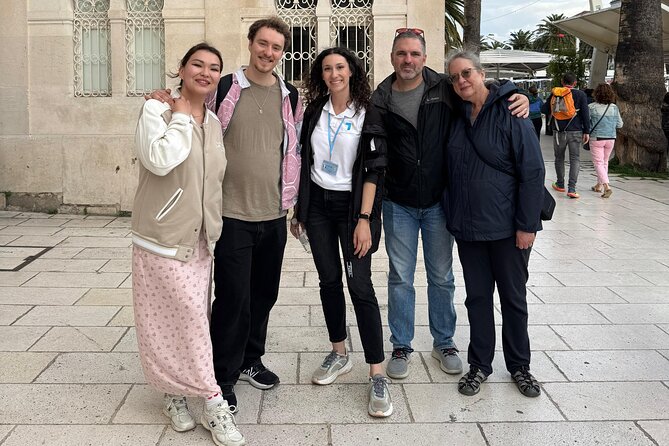
I really like two things here. First, you see the key landmarks in 1.5 hours, which is perfect when your feet are on limited vacation time. Second, the guide, Lucija, doesn’t just recite stones—she connects the sights to everyday Split life and answers questions along the way.
One consideration: this is a walking tour and it’s not suitable for wheelchair users. If mobility is an issue, you’ll want a different plan.
In This Review
- Key Things I’d Be Excited About on This Split Legends Tour
- Where the Tour Starts: A Model of Split and a Smart First Step
- Riva, Split: The Waterfront Walk That Sets the Tone
- Entering Diocletian’s Palace: Walls, Age, and Why It Still Matters
- Vestibul: The “In-Between” Space That Helps You Understand the Whole
- Peristil: The Courtyard Moment You’ll Remember
- Golden Gate: When a Gate Becomes a Story
- People’s Square: From Ancient Walls to Public Life
- Fruit Square: Local Names, Everyday Energy
- Price and Value: Is $28 Worth It for 90 Minutes?
- Timing, Group Size, and What to Bring So It Feels Easy
- Who This Tour Fits Best (And Who Might Skip It)
- Should You Book This Split Walking Tour?
- FAQ
- How long is the Split Walking Tour: History, Legends & Tales?
- Where does the tour start and end?
- Where exactly do I meet the guide?
- Is the tour offered in English?
- Are entrance tickets included for sites on the route?
- Is the tour good for families with children?
- Is this tour wheelchair accessible?
Key Things I’d Be Excited About on This Split Legends Tour
- Orientation fast: you start with a good “map in your head” at the model of Split before you hit the streets
- Diocletian’s Palace with context: explanations that help you understand what you’re actually looking at
- Legends and storytelling: you’ll hear local tales tied to specific stops
- Multiple public squares: you don’t just do the palace—you also see where people gather today
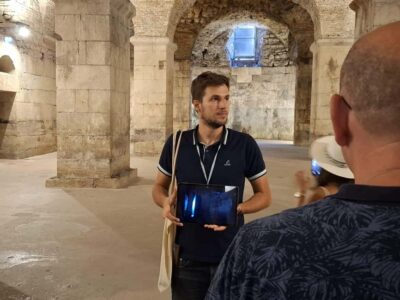
- Lucija as your guide: a local who can answer questions about Split beyond the monuments
Where the Tour Starts: A Model of Split and a Smart First Step
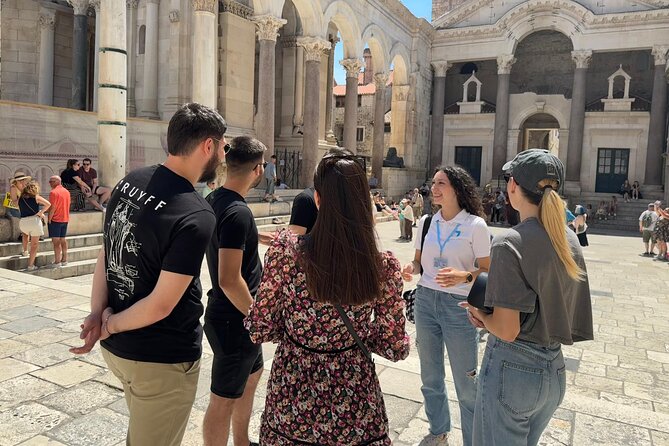
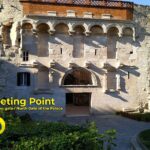
The meeting point is right at Obala Hrvatskog narodnog preporoda 22, and your guide waits next to the model of Split. Look for Lucija—or rather, look for her beside the model with a Tour4You sign.
That model isn’t a gimmick. It’s a quick way to understand how the Old Town is laid out, so when you walk past major sights, you know what part of town you’re in and why it matters. You’ll feel less like you’re wandering and more like you’re on a route.
I also love that this sets a friendly tone right away. You get into the flow fast, and you’re not spending your first hour playing “which street is this?” in the heat.
You can also read our reviews of more walking tours in Split

Riva, Split: The Waterfront Walk That Sets the Tone
Your next stop is the Riva, Split—the waterfront promenade that frames daily life along the sea. Even if you’ve only just arrived, this is where you can feel how Split breathes: boats, people moving through town, and that unmistakable coastal rhythm.
What makes this part useful is the context. You’re not just watching the water. You’re getting the explanation that helps connect the port-town atmosphere to what came before—when Roman power and later city life shaped where people lived and moved.
Practical tip: if you’re prone to cold or sunburn, this stretch can change mood fast. Bring sunglasses and plan for light wind off the water.
Entering Diocletian’s Palace: Walls, Age, and Why It Still Matters
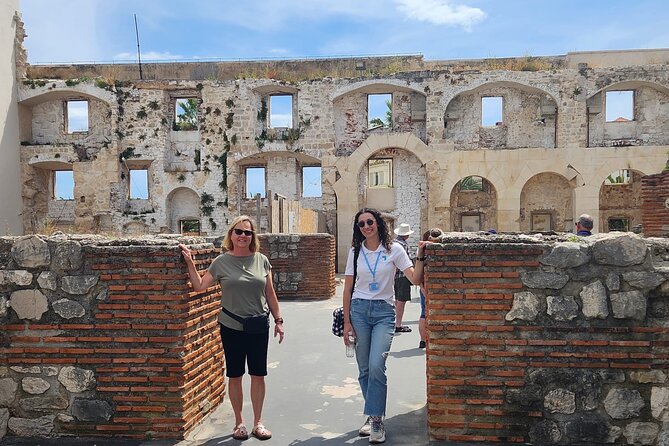
Then you get to the main event: Diocletian’s Palace. This is the part people come for, and the guide brings it to life with architecture and purpose—not just dates. The palace complex has been here for over 1,700 years, chosen when Emperor Diocletian made it his residence.
You’ll learn to read the place. Once someone points out the logic of walls, passages, and spaces, the stones start explaining themselves. Without that, the palace can feel like a maze of highlights. With the guide, it clicks into a living layout.
And the tour’s promise—watching Split change from Diocletian’s era to the city you see now—makes the palace stops more than photo ops. You’ll understand how an ancient imperial setting turned into neighborhoods, streets, and public movement.
Vestibul: The “In-Between” Space That Helps You Understand the Whole

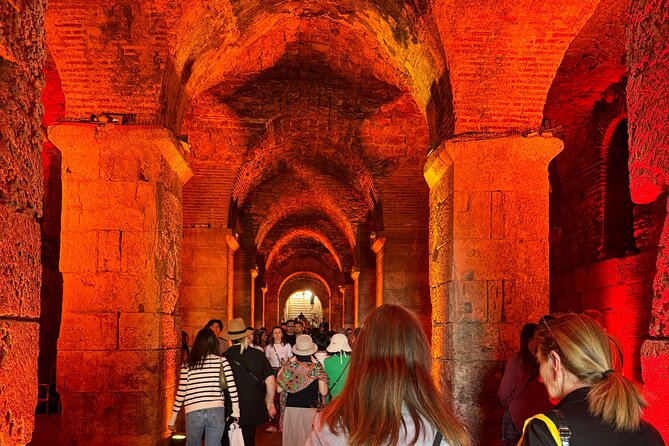
After the palace area, you’ll visit the Vestibul. This kind of stop is quietly important. It’s not always the first thing people think to photograph, but it’s where you can appreciate the transition from outside to inside, from street life to ceremonial space.
This is also where the storytelling really helps. When your guide explains how these spaces were designed to guide movement, you stop seeing it as random and start seeing it as engineered. That’s when the palace begins to feel less like a monument and more like a system that shaped daily experience.
If you’re the kind of person who likes details—thresholds, openings, how stone channels people—this stop will feel especially satisfying.
Peristil: The Courtyard Moment You’ll Remember
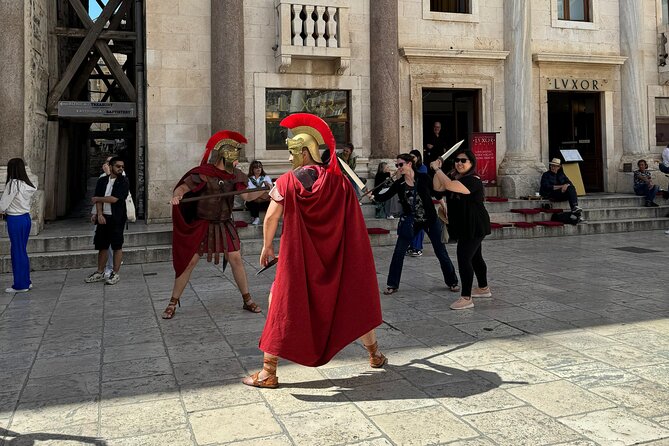
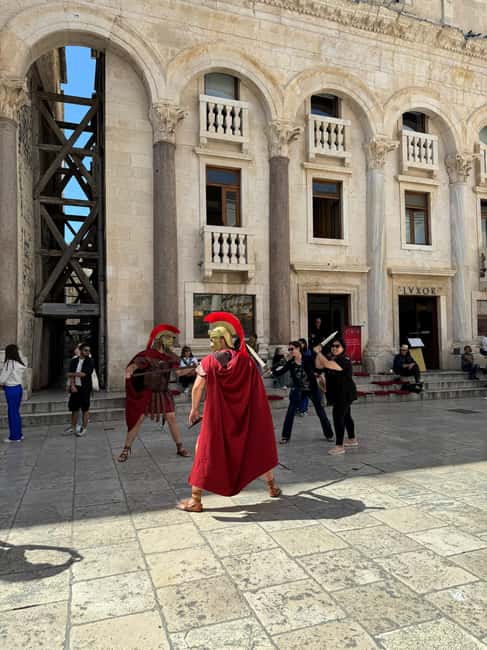
Next up is Peristil, the palace courtyard. This is one of those spaces where your brain naturally slows down. Columns, open air, and sightlines make it feel like the palace is still doing its job as a central hub.
In a short tour, Peristil works as the emotional anchor. You’ve already seen the outer boundaries and key access points, and now you’re in the “center of the story.” The guide helps you connect what you’re seeing with how the palace functioned and why it influenced later life in Split.
If you time it right, you might catch that classic courtyard effect: you can see where sight goes and how people flow. It’s a great reset before you head toward the gates and squares.
You can also read our reviews of more historical tours in Split


Golden Gate: When a Gate Becomes a Story
The route continues to the Golden Gate, Split. A gate sounds simple until you treat it as a gateway between eras. This is exactly how your guide frames it—less as a landmark checkbox, more as a symbolic threshold with stories behind it.
This is where legends and tales fit naturally. The palace isn’t just stonework; it’s also a place people built meanings around. Listening while standing at the gate makes the legend feel grounded rather than abstract.
One more thing: gates are usually the places where you’ll understand orientation best. Once you’ve stood by Golden Gate, the rest of your walk tends to make more sense, because you grasp the movement logic of the complex.
People’s Square: From Ancient Walls to Public Life
Then it’s outside the palace focus, and you move into People’s Square. This stop is valuable because it shows how Split didn’t stop at its Roman core. The city grew layers, and public spaces like this are where today’s civic life shows up.
You’ll hear how the square functions as a modern meeting point, while still sitting in the shadow of older structures. It’s a simple contrast, but it helps you understand why UNESCO protection matters here: you’re not just looking at ruins. You’re walking through a living city that evolved out of that original framework.
If you’re visiting for the first time, this stop is your clue that Split is both historic and practical. People come here to meet, wait, talk, and move on—just like you will.
Fruit Square: Local Names, Everyday Energy

Next is Fruit Square, Split. The name alone hints at what this kind of place has meant in city life—an area connected to daily routines and trade. Your guide ties the location into the broader story of how city needs shape what’s built where.
This stop is also a nice “texture check.” After palace architecture and gate symbolism, Fruit Square brings you back to the human scale. You’re close to the kind of activity that makes travel feel real instead of museum-like.
If you want something practical to do after the tour, Fruit Square is the kind of area where you can keep exploring nearby streets at your own pace with an understanding of where you are.
Price and Value: Is $28 Worth It for 90 Minutes?
At $28 per person for about 1.5 hours, you’re paying for something that’s easy to underestimate: guided orientation through a complicated old site. You’re not just walking a straight line. You’re getting explanations at multiple stops—Riva, key palace areas, and major squares—plus a licensed guide.
Entrance tickets aren’t included, but the guide gives you information so you can check out specific cultural or religious sites later on your schedule. That’s a smart compromise. It keeps the tour flexible, and it prevents your 90 minutes from turning into a line-hopping sprint.
For first-time visitors, I think this pricing makes sense because the alternative is usually worse: wandering without context costs time and leaves you with a bunch of disconnected photos. This tour gives you a mental map fast, then you can spend the rest of your trip choosing what to linger on.
Timing, Group Size, and What to Bring So It Feels Easy
The tour is designed for a small group, which matters more than people think. In a tight area like Diocletian’s Palace, you want your guide to keep control of the flow, and you want enough space to actually hear the explanations.
It runs in English, and you should plan on walking the route at a steady pace. Bring comfortable shoes—you’ll be on stone and uneven surfaces in Old Town streets. Your back may survive, but your shoes need to be ready.
Weather can affect the schedule, and if it’s canceled due to poor conditions you’ll have a choice to reschedule or receive a full refund. In other words: don’t stress it too much, but do have a flexible plan.
Who This Tour Fits Best (And Who Might Skip It)
This tour is a great fit if you want:
- a fast Split orientation that starts with the right meeting point and route
- a guided walk through Diocletian’s Palace plus the public squares beyond it
- local perspective from Lucija, including day-to-day answers about Split
It’s also a good option if you like legends and want them tied to specific places, not just generic folklore. The tour’s structure makes that storytelling feel practical.
Skip it if you need wheelchair access, because it’s not suitable for wheelchair users. If you’re traveling with kids, they must be accompanied by an adult throughout the tour.
Should You Book This Split Walking Tour?
Yes—if you’re arriving in Split and want a quick, well-taught route that turns “I see famous things” into “I understand what I’m looking at,” this is a strong choice. The combination of Diocletian’s Palace stops, Riva context, and squares like People’s Square and Fruit Square makes it feel like a real first day in town rather than a checklist.
Book it especially if you appreciate a local guide who can answer questions and add what’s happening around Split today. For a 90-minute walking tour at $28, that kind of direction is hard to beat.
FAQ
How long is the Split Walking Tour: History, Legends & Tales?
The tour lasts about 1.5 hours.
Where does the tour start and end?
It starts and ends at Obala Hrvatskog narodnog preporoda 22.
Where exactly do I meet the guide?
Your guide waits next to the model of Split, holding a Tour4You sign.
Is the tour offered in English?
Yes, the live tour guide speaks English.
Are entrance tickets included for sites on the route?
No. Entrance tickets are not included, but the guide provides information so you can check things out later at your own pace.
Is the tour good for families with children?
Children must be accompanied by an adult throughout the tour.
Is this tour wheelchair accessible?
No, this tour is not suitable for wheelchair users.