REVIEW · SPLIT
Split Walking Tour: History, Legends & Tales
Book on Viator →Operated by Tour4You · Bookable on Viator
Split teaches fast, if you walk. This 1.5-hour Split walking tour strings together Diocletian Palace’s big moments and smaller legends, from the Riva promenade down into the palace’s underground bones. I like how you get context for what you’re seeing without turning it into a school lecture.
I especially enjoy the storytelling style—guides like Lucija share funny, memorable details and then help you plan what to eat and where to go next. I also like the small-group size (max 12), so questions don’t get lost in a crowd.
One consideration: this is built for highlights and walking, not museum time. You also won’t enter paid sights, and it needs decent weather to run comfortably, so plan a flexible day.
In This Review
- Key takeaways before you go
- Why This 90-Minute Split Walk Is a Smart First Pick
- Starting at Riva Harbor: Get the Palace in One Breath
- The Diocletian Palace Substructures: The City Under the City
- Vestibulum to Peristyle: Where the Palace Moves from Private to Public
- Golden Gate and Gregory of Nin: Legends With Actual Feet
- Pjaca and Fruit’s Square: How Split Grew Beyond the Walls
- Price and Value: What You Get for About $30
- How to Make the Most of It (Without Hating Your Feet)
- Should You Book This Split Walking Tour?
- FAQ
- How long is the Split walking tour?
- What is the price per person?
- Is the tour in English, and how many people are in a group?
- Where do I meet the guide?
- Does the tour include museum tickets or paid admissions?
- What’s the tour cancellation policy like?
Key takeaways before you go
- Riva Harbor as your opener: you start on Split’s main promenade with a clear Diocletian setup.
- Underground substructures: you’ll pass through the palace’s maze-like corridors and rooms.
- Peristyle’s long view: the 3500-year-old sphinx sits in your sightline while you hear the story.
- Golden Gate and Gregory of Nin: a legend you can take part in with the statue’s toe.
- Two squares beyond the palace walls: Pjaca and Fruit’s Square show how the city grew outward.
Why This 90-Minute Split Walk Is a Smart First Pick
If you’re trying to get your bearings in Split, this tour is a strong starter. In about an hour and a half, you connect the dots between the city you see today and the Roman power center that created the layout. You’ll walk a mostly central route, so it’s useful even if you only have a day.
The best value here is focus. You’re not dragged to five unrelated “old town” stops. Everything ties back to Diocletian’s Palace—its public face, its private spaces, and the parts most people miss.
The small group matters too. With a maximum of 12 people, the guide can keep the pace brisk without racing past questions. That’s a big deal in a place like Split, where one corner can look similar to the next until someone gives you the right frame.
You can also read our reviews of more walking tours in Split


Starting at Riva Harbor: Get the Palace in One Breath
You begin on Obala Hrvatskog narodnog preporoda at the Riva Harbor promenade—Split’s main waterfront walkway. The tour starts here on purpose, with an introduction to Diocletian, the palace, and how the whole area became Split. Even before you’re inside the palace walls, you start recognizing shapes and alignments you’d otherwise shrug at.
There’s also a model of Split mentioned in the flow of the tour. That little preview helps you understand why the streets feel like they orbit something ancient. You’ll likely find it easier to navigate on your own afterward, because you’ve been given a mental map.
This stop is light and quick—about 15 minutes. It’s a good setup if you’re arriving hungry for the “big picture” but don’t want a slow start.
The Diocletian Palace Substructures: The City Under the City
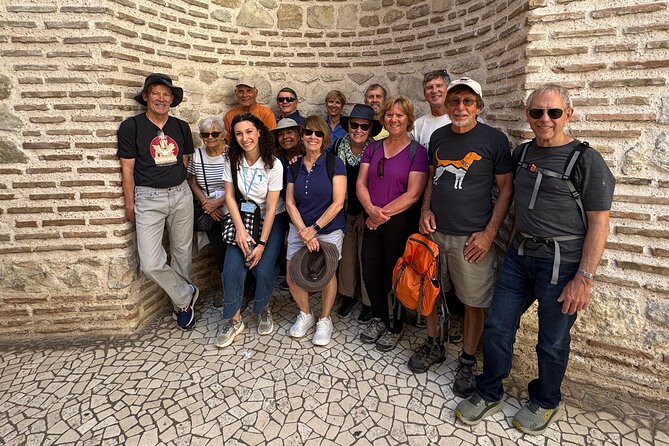
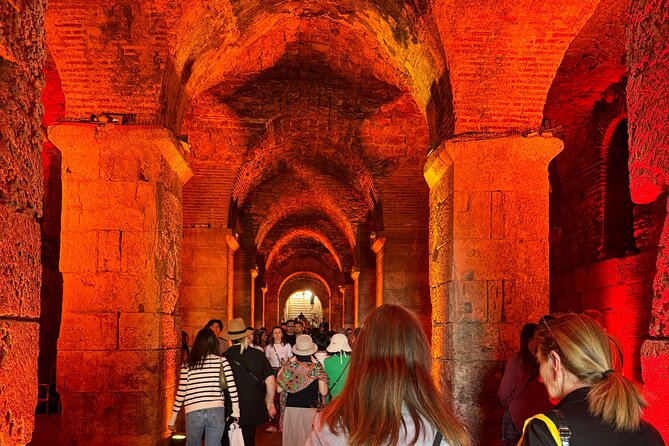
Next you move into the Diocletian Palace substructures. Think of it as the palace’s underworld: underground corridors and rooms that formed the base of Emperor Diocletian’s palace. The vibe is part museum-feeling, part imagination game, since you’re not just looking—you’re being encouraged to picture how people moved and lived down here.
The payoff is engineering and atmosphere. You’ll hear about Roman building techniques, then you’ll be in the space where those techniques actually matter. It’s the kind of stop that makes you notice details you’d normally pass by: the layout, the solidity, the logic of how the spaces connect.
This segment is about 10 minutes. That’s enough time to feel the “wow” without exhausting you before you reach the more open-air sections. One practical note: underground spaces can feel cooler and darker than the waterfront, so bring a layer if you’re touring in warm months and the air-conditioning effect hits hard.
Vestibulum to Peristyle: Where the Palace Moves from Private to Public
From the substructures, you head toward the vestibulum, the grand entrance hall of Diocletian’s Palace. You’ll walk through the southern parts of the palace area—where Diocletian’s apartments once stood. This matters because these spaces explain why the palace feels both fortress-like and human-scale at the same time.
You also pass by references to Triklinium (the dining hall) and gardens along the route. Even if you’re not entering a museum, these terms give you handles for what you’re seeing. When you understand “this was for dining” or “this connected to greenery,” stonework starts to feel like a living plan instead of random ruins.
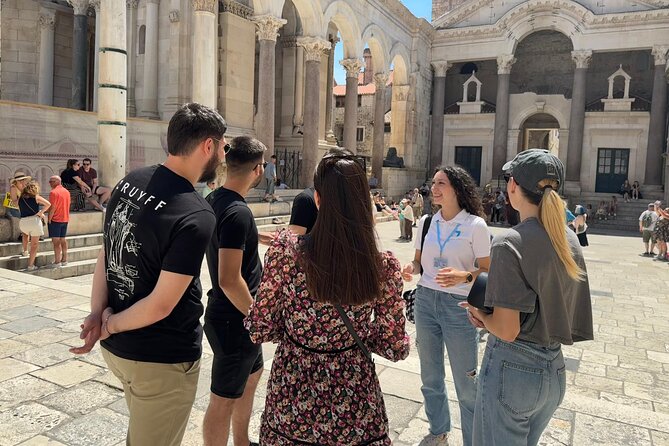
Then comes the highlight for many people: the Peristyle. You’ll spend about 20 minutes here, and the emotional logic is clear. The peristyle is one of the closest touches between modern visitors and ancient heritage, and you’re in the right place to feel that.
The tour includes a standout detail: a 3500-year-old sphinx that’s described as perfectly preserved and closely watched over in this space. Whether you’re into Egyptology or not, it’s a memorable visual anchor. You can’t help but look up, around, and make connections between cultures when an object like that sits in the middle of a Roman palace story.
Golden Gate and Gregory of Nin: Legends With Actual Feet
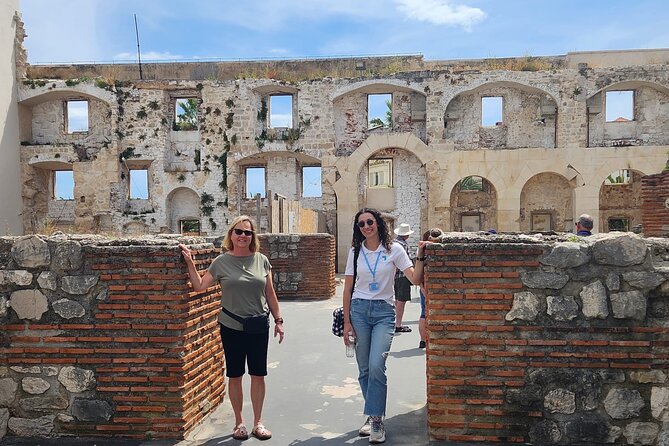
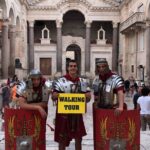
After the Peristyle, you’ll head to the Golden Gate, once an entranceway that welcomed visitors into Diocletian’s Palace with grandeur. It’s one of those spots where the architecture tells you this was meant to impress. You’ll be shown the symbolism through the guide’s explanation, so it doesn’t feel like you’re just walking through another old doorway.
Then the tour shifts to a legend you can physically take part in. You’ll stop at the statue of Gregory of Nin. The tradition on this tour is simple: rubbing the statue’s big toe is said to bring good luck and grant wishes. It’s touristy in the best way—because you’re still doing something rooted in local ritual, not just taking a photo and moving on.
This stop is about 15 minutes, which keeps it from turning into a slow wait around the most crowded landmark. It’s enough time to learn the story, participate if you want, and still have energy for the squares that follow.
You can also read our reviews of more historical tours in Split




Pjaca and Fruit’s Square: How Split Grew Beyond the Walls

The walking route continues outside the palace walls into Pjaca, officially People’s Square (Narodni Trg). This is where the story expands from palace life to city life. Pjaca was developed beyond the walls in the 14th century as the population grew, and the tour ties that growth to where you’re standing.
You’ll hear that there was a former 15th-century city hall here, and that Pjaca has stayed a gathering space through the centuries. Practically, it’s a great place to pause. You can grab coffee, take a breather, and then decide whether you want to linger for the evening atmosphere.
The tour gives about 10 minutes here, which is just right for orientation. You don’t get a “sit and read” moment; you get a quick, useful sense of where the city pulses.
Next is Fruit’s Square (Trg Brace Radic). This square is smaller, but it’s packed with visible landmarks and day-to-day city energy—bars, restaurants, and shopping line up around you. The biggest highlight is the octagonal Venetian tower, a leftover from a former fortress built in the 15th century for defense of a small town.
Across the way is another big visual: the Milesi palace from the 17th century, with a Baroque facade. The tour describes it as one of the best examples of that style in Dalmatia. Even if you’re not a baroque-architecture nerd, the contrast between tower and palace makes the square feel like a timeline you can walk through.
This part is about 10 minutes too, keeping the momentum. By the time you reach the end, you’re ready to continue exploring without feeling like you’ve been sprinting.
Price and Value: What You Get for About $30
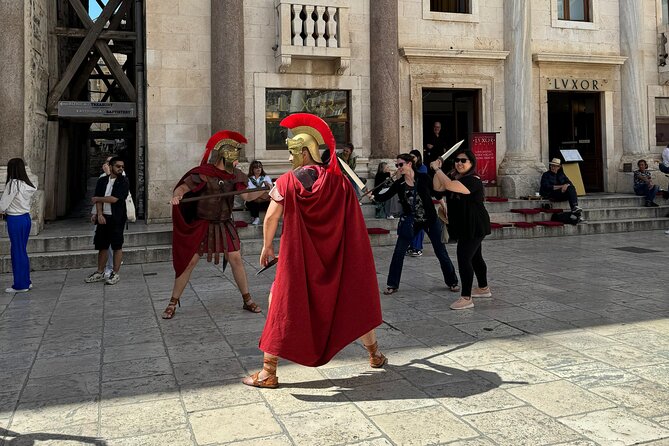
At about $30.17 per person for roughly 1 hour 30 minutes, the price lands in a reasonable range for an English-language licensed walking tour in Split. The key value isn’t secret access or museum entry. It’s expert direction through the spaces you can already see, so the time you spend walking becomes more meaningful.
You also get a mobile ticket, and you’re not stuck figuring things out in the moment. The tour includes a licensed guide, and the route is structured so you’re not wandering aimlessly around Diocletian’s Palace trying to guess what matters.
One more value point: the group size cap (max 12) helps you get real answers. If you tend to ask follow-up questions—about names, dates, or why something was built a certain way—you’ll benefit from the smaller format.
The one place to be honest with yourself: this tour is not a ticket-to-ticket museum day. It explicitly doesn’t include admission to museums or paid sites. If you’re the type who wants to spend an hour inside curated exhibits, you’ll probably want to pair this with something else on your schedule.
How to Make the Most of It (Without Hating Your Feet)

You’ll cover multiple palace zones and squares in a short window, so wear shoes you trust. Split’s old center can be uneven, and you’re moving from waterfront to underground corridors and back up again.
Bring water. Even if the pace feels manageable, you’re still outdoors part of the time and then in cooler enclosed spaces, and your body will notice that rhythm.
If you’re visiting early in the day, you’ll likely enjoy it more. The tour’s timing fits an “orientation morning” mindset. Starting earlier often means cooler temperatures and fewer people blocking your view of the key architectural points.
Finally, treat the tour as a planning tool. Guides on this route often go beyond dates and legends to suggest what to eat nearby—pasticada came up in the tour feedback I was given, along with gelato recommendations. After you walk the route, you’ll have a better sense of where to place a meal so it’s convenient instead of random.
Should You Book This Split Walking Tour?

I think you should book it if you want a clear introduction to Split that focuses on Diocletian’s Palace and the legends you’ll see in real life. It’s especially good for first-timers who want structure: start at the waterfront, learn the palace logic, then finish in the squares where modern Split actually happens.
Skip it (or add something else) if you’re expecting museum entries or paid-site access. This is a walk-and-story format, not a deep ticketed program. Also, if your trip is tightly locked to a specific weather window, remember the tour requires good weather to run comfortably.
If you do book, you’ll get two big wins: you’ll understand what you’re looking at, and you’ll leave with a route you can keep using on your own—starting again at the Riva Harbor end point.
FAQ
How long is the Split walking tour?
It runs for about 1 hour 30 minutes.
What is the price per person?
The price is listed as $30.17 per person.
Is the tour in English, and how many people are in a group?
The tour is offered in English, and the group size has a maximum of 12 travelers.
Where do I meet the guide?
The meeting point is Obala Hrvatskog narodnog preporoda 22, 21000, Split, Croatia, and the tour ends back at the meeting point.
Does the tour include museum tickets or paid admissions?
No. There are no admission tickets included, and the tour does not enter museums or other paid sites.
What’s the tour cancellation policy like?
You can cancel for a full refund up to 24 hours in advance. The experience requires good weather, and if it’s canceled due to poor weather you’ll be offered a different date or a full refund.